
Electrical and Electronics Engineering
Vision
- To emerge as a renowned department for high quality teaching, learning and research in the domain of Electrical and Electronics Engineering, producing professional engineers, to meet the challenges of society.
Mission
- To establish the infrastructure resources for imparting quality technical education in Electrical and Electronics Engineering.
- To achieve excellence in teaching, learning, research and development.
- To impart the latest skills and developments through practical approach along with moral and ethical values.
Program Educational Objectives (PEO)
- PEO1: Have strong foundation in Electrical and Electronics Engineering to excel in professional career, in higher studies or research.
- PEO2: Analyse, design and develop various interdisciplinary projects and products, to contribute industrial needs and societal development.
- PEO3: Have professional ethics and effective communication skills with life-long learning attitudes.
Program Outcomes (PO)
Engineering Graduates will be able to:
- PO1 Engineering knowledge: Apply the knowledge of mathematics, science, engineering fundamentals, and an engineering specialization to the solution of complex engineering problems.
- PO2 Problem analysis: Identify, formulate, review research literature, and analyze complex engineering problems reaching substantiated conclusions using first principles of mathematics, natural sciences, and engineering sciences.
- PO3 Design/development of solutions: Design solutions for complex engineering problems and design system components or processes that meet the specified needs with appropriate consideration for the public health and safety, and the cultural, societal, and environmental considerations.
- PO4 Conduct investigations of complex problems: Use research-based knowledge and research methods including design of experiments, analysis and interpretation of data, and synthesis of the information to provide valid conclusions.
- PO5 Modern tool usage: Create, select, and apply appropriate techniques, resources, and modern engineering and IT tools including prediction and modelling to complex engineering activities with an understanding of the limitations.
- PO6 The Engineer and Society: Apply reasoning informed by the contextual knowledge to assess societal, health, safety, legal and cultural issues and the consequent responsibilities relevant to the professional engineering practice.
- PO7 Environment and sustainability: Understand the impact of the professional engineering solutions in societal and environmental contexts, and demonstrate the knowledge of, and need for sustainable development.
- PO8 Ethics: Apply ethical principles and commit to professional ethics and responsibilities and norms of the engineering practice.
- PO9 Individual and team work: Function effectively as an individual, and as a member or leader in diverse teams, and in multidisciplinary settings.
- PO10 Communication: Communicate effectively on complex engineering activities with the engineering community and with society at large, such as, being able to comprehend and write effective reports and design documentation, make effective presentations, and give and receive clear instructions.
- PO11 Project management and finance: Demonstrate knowledge and understanding of the engineering and management principles and apply these to one’s own work, as a member and leader in a team, to manage projects and in multidisciplinary environments.
- PO12 Life-long learning: Recognize the need for, and have the preparation and ability to engage in independent and life-long learning in the broadest context of technological change.
Program Specific Outcomes (PSO)
Students will have the ability to
- PSO1: Apply logical, analytical and technical skills to model and develop electrical systems and appliances that meet societal requirements.
- PSO2: Apply fundamental and advanced knowledge of Electrical and allied Engineering in the design and development of hardware and software tools for non-conventional electrical power generation and distribution.
Department Highlights
Student Research & Publications:
- 7 Journal Publications by Students
- 7 IEEE Conference Publications
- 73 Conference Proceedings Publications
Faculty Book Publications:
- 3 International Book Publications
Research & Doctoral Contributions:
- 4 Recognized Research Supervisors
- 21 Research Scholars currently pursuing Ph.D. under our supervisors
- 10 Research Scholars successfully completed Ph.D.
- Faculty members are serving as Doctoral Committee (DC) Members for 19 Research Scholars
Google Scholar Research Impact:
Department Research Metrics
- Citations: 1,387+
- h-index: 19
- i10-index: 53
These metrics reflect the department's strong research visibility and global academic impact.
Faculty Publications: 118
Scopus Indexed Journal Publications
| Academic Year | Publications |
|---|---|
| 2021–2022 | 14 |
| 2022–2023 | 06 |
| 2023–2024 | 16 |
| 2024–2025 | 09 |
| 2025–2026 | 06 |
| Total | 51 |
Scopus Indexed Conference Publications
| Academic Year | Publications |
|---|---|
| 2021–2022 | 08 |
| 2022–2023 | 22 |
| 2023–2024 | 08 |
| 2024–2025 | 10 |
| 2025–2026 | 02 |
| Total | 50 |
Scopus Indexed Book Chapter Publications
| Academic Year | Publications |
|---|---|
| 2021–2022 | 04 |
| 2022–2023 | 02 |
| 2023–2024 | 03 |
| 2024–2025 | 03 |
| 2025–2026 | 05 |
| Total | 17 |
Industry-Supported Learning Environment
- Well-established Industry-Supported Laboratories
- Regularly conducted Value Added Courses (VACs)
- Hands-on training aligned with industry requirements and emerging technologies
International Certifications
Our students have successfully completed globally recognized certification programs from:
- Microsoft Azure
- Google Cloud- First Level
- Amazon Web Services (AWS)
Faculty NPTEL Achievements
| Category | Count |
|---|---|
| Elite + Gold (Topper) | 01 |
| Elite + Gold | 05 |
| Elite + Silver (Topper) | 01 |
| Elite + Silver | 17 |
| Elite | 32 |
| Successfully Completed | 16 |
| Total Certifications | 72 |
Students NPTEL Achievements
| Category | Count |
|---|---|
| Elite + Gold (Topper) | 1 |
| Elite + Gold | 4 |
| Elite + Silver (Topper) | 1 |
| Elite + Silver | 21 |
| Elite | 93 |
| Successfully Completed | 131 |
| Total | 251 |
Intellectual Property Rights (IPR)
Faculty Patents & Design Registrations – 81
| Academic year | Patent Published | Patent Granted | Design Registered | Design Published | Design Granted | Total Granted |
|---|---|---|---|---|---|---|
| 2019-2020 | 03 | - | - | - | - | 03 |
| 2020-2021 | 06 | - | - | - | - | 06 |
| 2021-2022 | 05 | 02 | - | - | - | 07 |
| 2022-2023 | 09 | - | - | 02 | - | 11 |
| 2023-2024 | 07 | 02 | 04 | 01 | 03 | 17 |
| 2024-2025 | 14 | 04 | 02 | - | 01 | 21 |
| 2025-2026 | 15 | 01 | - | - | - | 16 |
| Total Count | 59 | 09 | 06 | 03 | 04 | 81 |
Fund Received: Rs. 92.51Lakhs (IEEE, IEI, TNSCST)
Academic year (2021-2022)
- Student Branch Operating Fund (IEEE Madras Section) - Rs. 32,390
- Student branch fund (IEEE Madras Section) - Rs. 23,400
- TNSCST - Rs. 7,500
Total - Rs.63,290
Academic year (2022-2023)
- Student branch fund (IEEE Madras Section) - Rs. 10,760
- Student Branch Activity award (IEEE Madras Section) - Rs. 5,000
- PES High Performing Student Branch Chapter Program Award (IEEE Madras Section) - Rs. 14,616
- TNSCST- 2 projects - Rs. 15,000
Total - Rs. 45,376
Academic year (2023-2024)
- Student Branch Operating Fund (IEEE Madras Section) - Rs. 29,826
- PES High Performing Student Branch Chapter Program Award (IEEE Madras Section) - Rs. 16,564
- All India Workshop on Role of AI in Hybrid Electric Vehicle and Battery (IEI) - Rs. 40,000
- International Conference on EMERGING TRENDS IN ENGINEERING SCIENCE AND TECHNOLOGY (IEI) - Rs. 11,137
- Student branch fund (IEEE Madras Section) - Rs. 28,000
Total-Rs. 1,25,527
Academic year (2024-2025)
- Naan Mudhalvan Niral Thiruvizha 2.0 - Rs. 10,000
- AICTE-IDEA lab - Rs. 90,00,000
- TNSCST - Rs. 7,500
Total - Rs. 90,17,500
Industry Collaboration & Placement Excellence
- 13 Memorandum of Understanding (MoUs) signed with leading Core Industry Companies.
- Strong industry-academia partnerships facilitate internships, industrial visits, in-plant training, expert lectures, and collaborative projects.
- Industry-supported laboratories and value-added courses provide hands-on practical exposure.
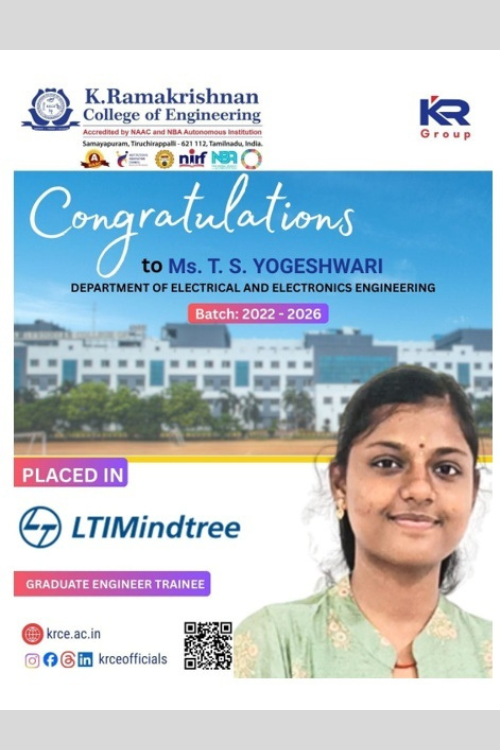
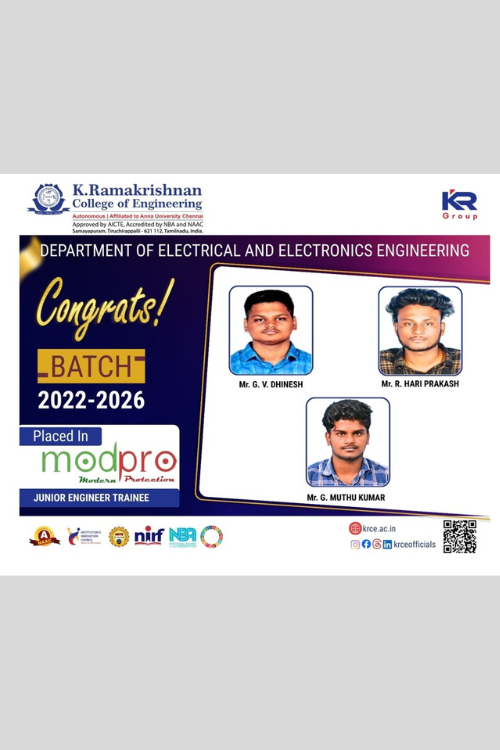
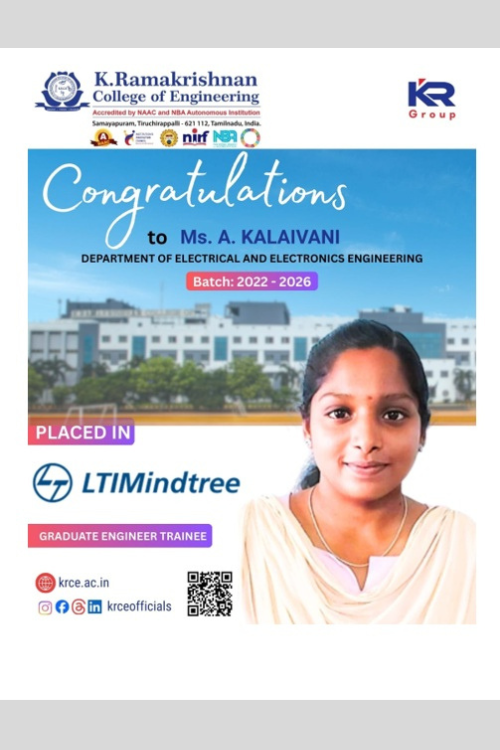
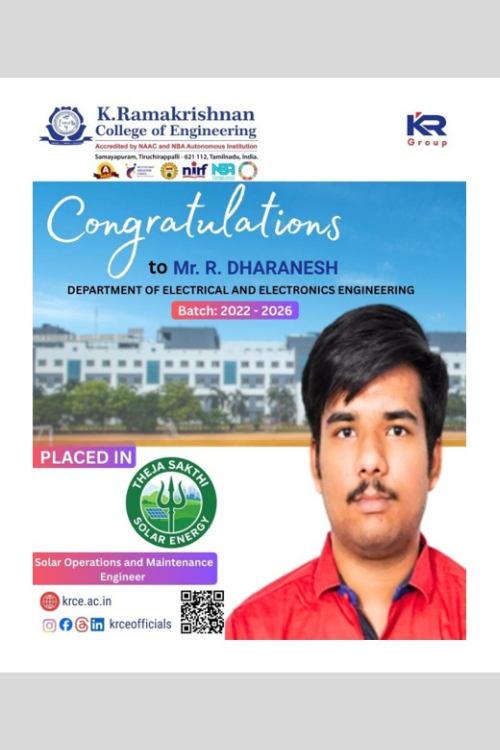
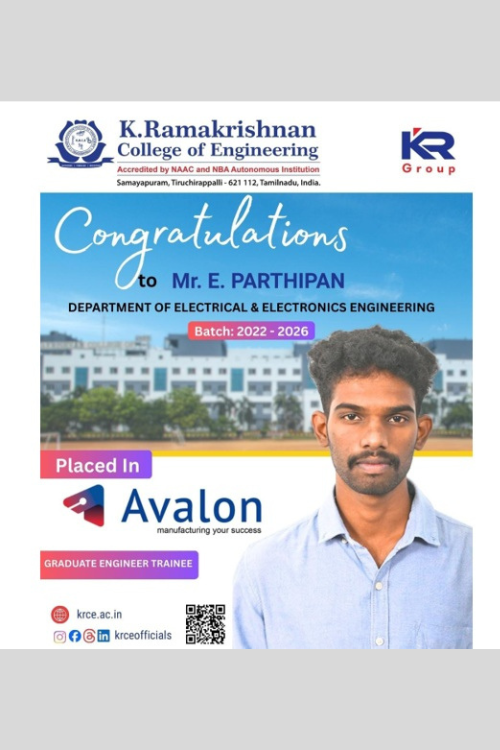
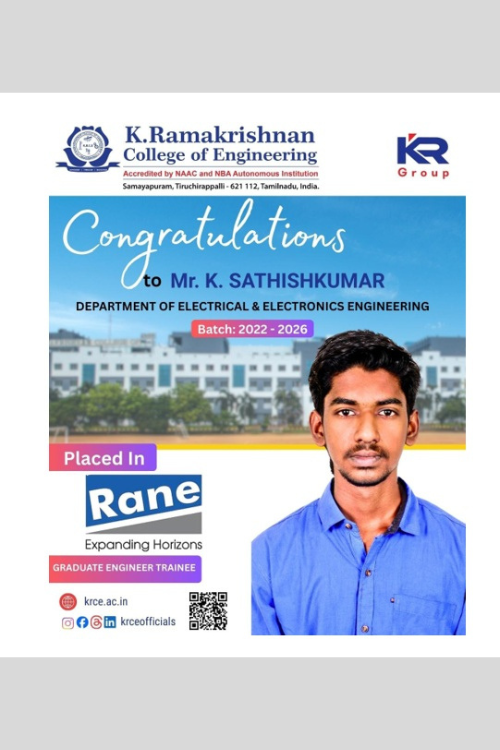
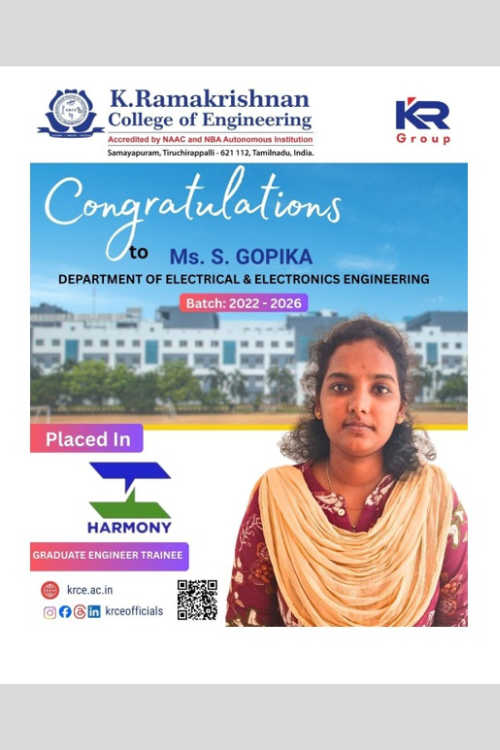
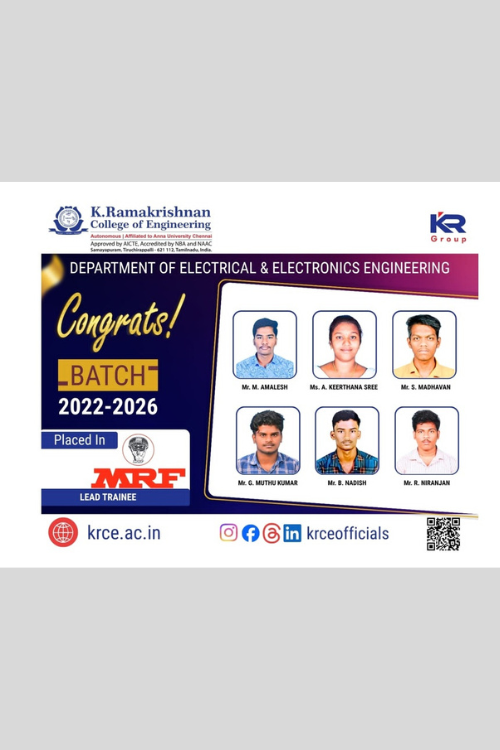
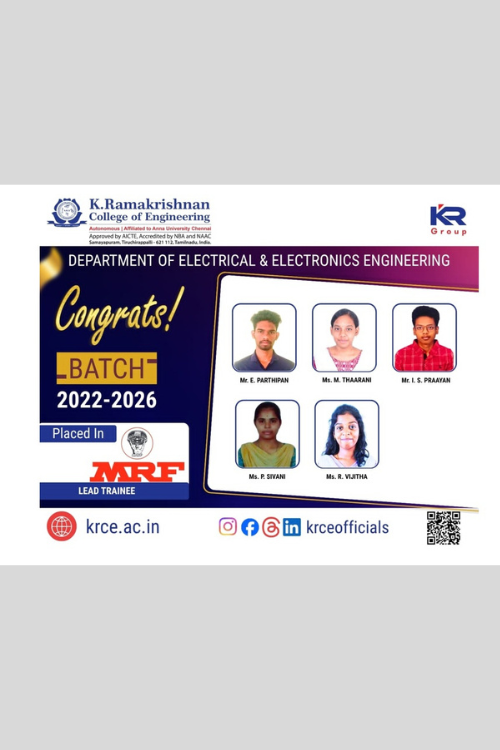
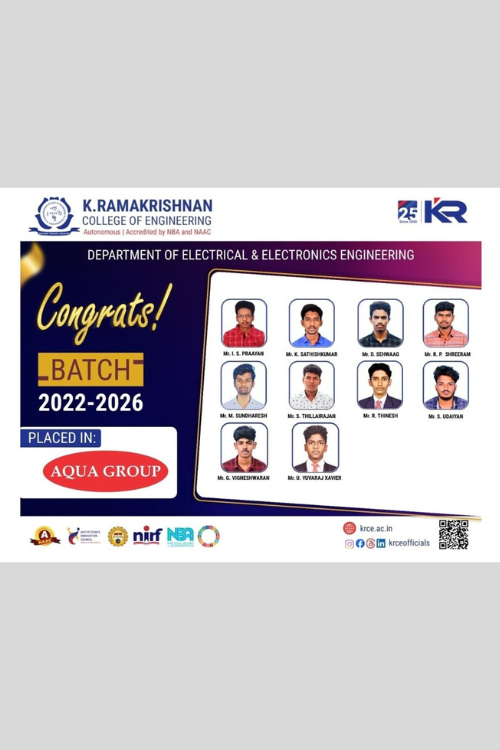
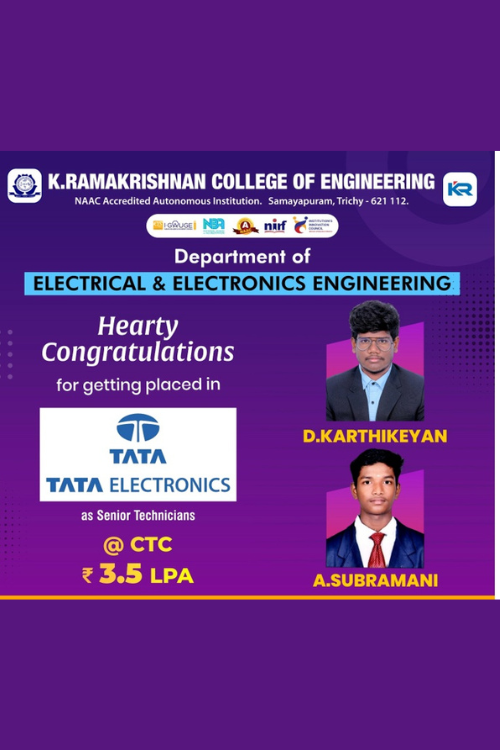
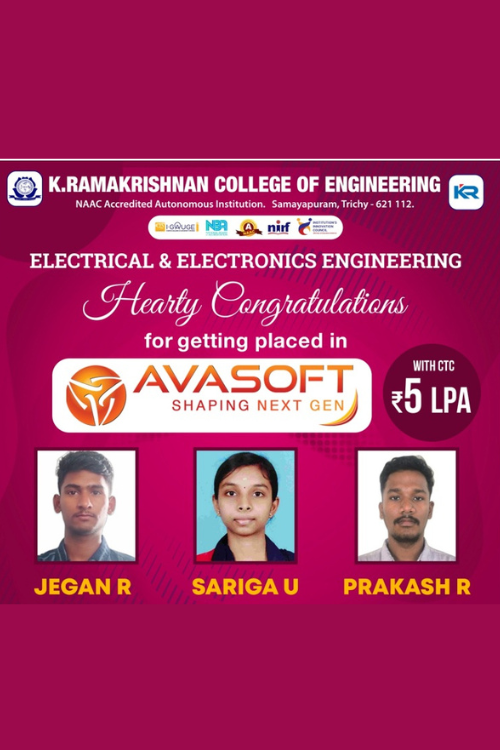
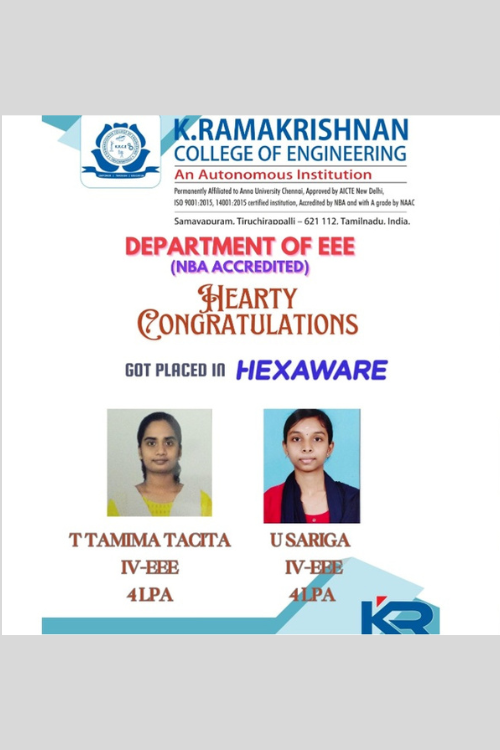
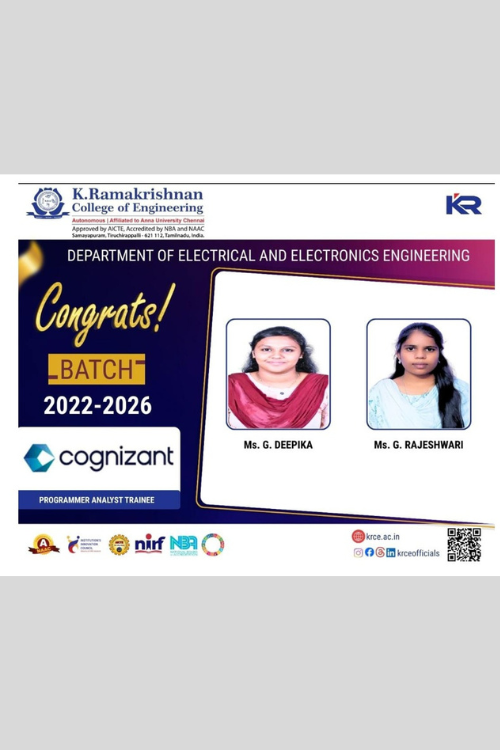
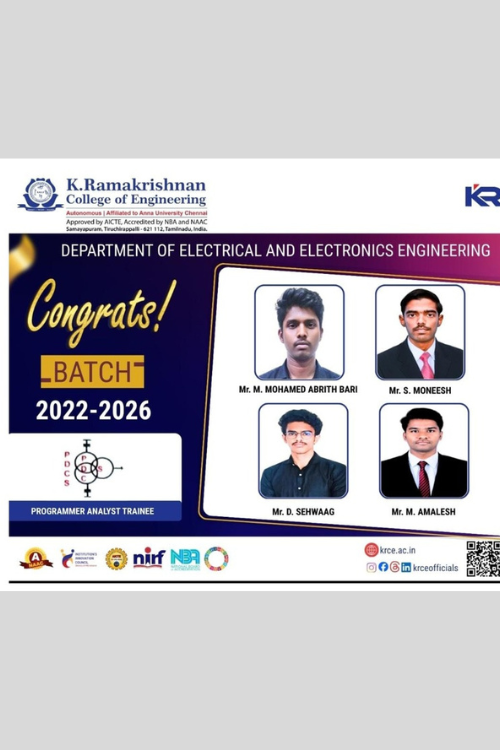
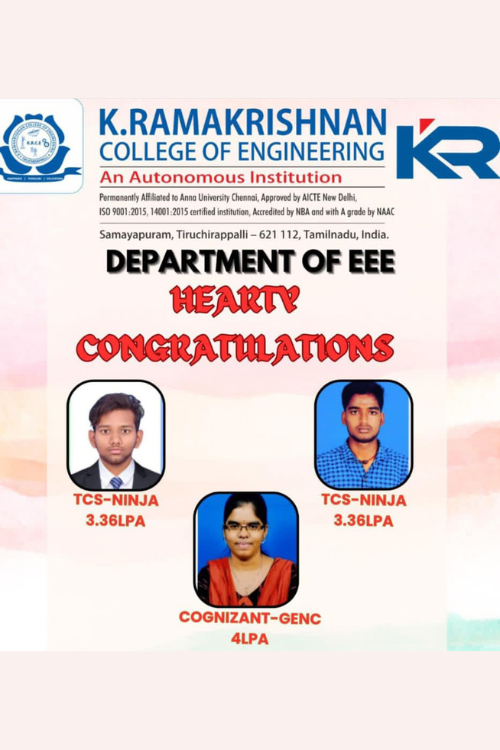
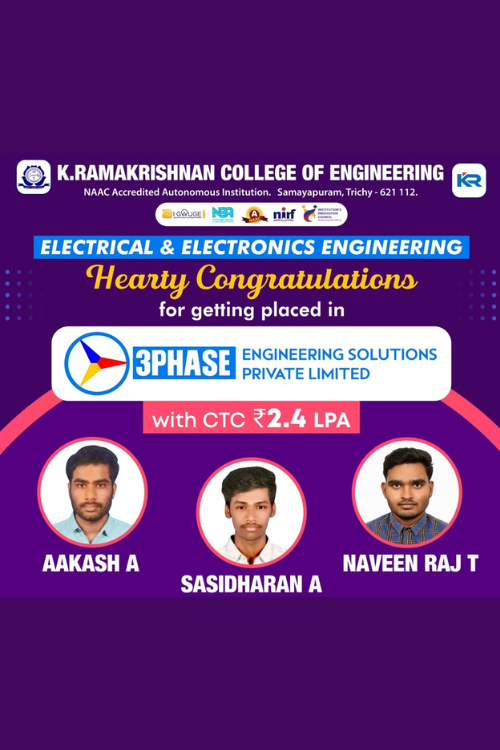
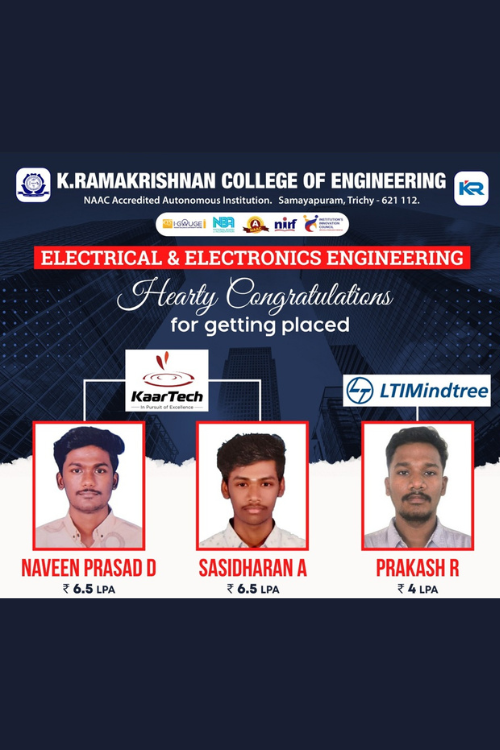
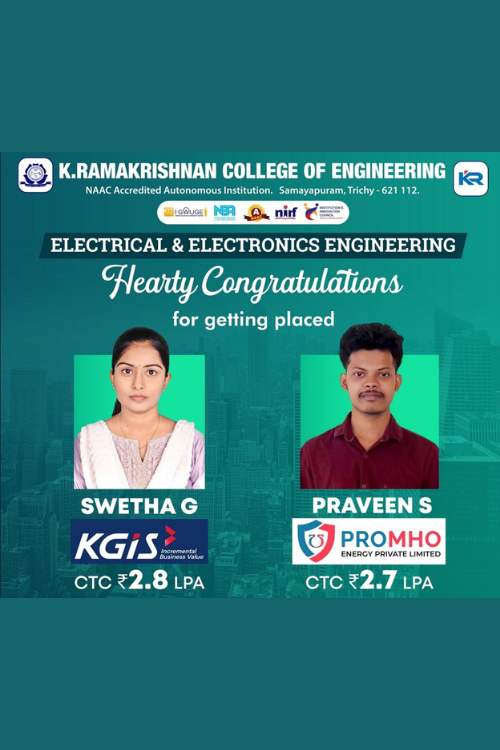
- A significant number of our students have been successfully placed in our MoU partner companies and other reputed core industries.
- Continuous interaction with industry experts enhances students' technical competencies and employability skills.
Laboratories
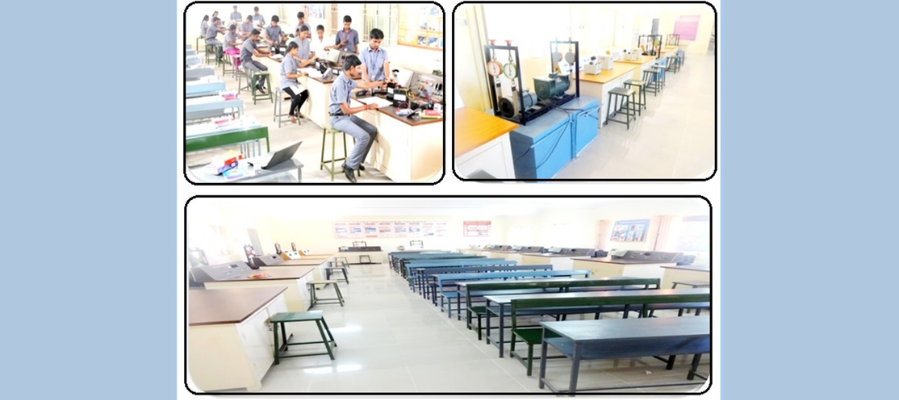
Lab 1: Electrical Machines Laboratory
Laboratory In-charge: Dr. R. Manivasagam, M.E., Ph.D. Cost of the Lab: Rs. 27,01,188.94/- Area: 260.22 Sq.m
The Electrical Machines Laboratory enables students to gain practical knowledge of transformers, DC machines, induction motors and synchronous machines. Students develop the ability to conduct performance tests, analyze characteristics, determine efficiency and understand machine operation under various loading conditions. The laboratory enhances troubleshooting skills and prepares students for industrial applications involving electrical drives and machines.
Outcomes of the Laboratory:
- Understand and analyze the construction and working of DC generators and motors.
- Study the performance and characteristics of transformers, including EMF, MMF, ZPF, and ASA methods.
- Gain knowledge on different types of starters and their applications.
- Analyze V and Inverted V curves for synchronous machines.
- Understand the performance and operation of synchronous and induction machines.
- Acquire knowledge on separation of losses and parallel operation of alternators.
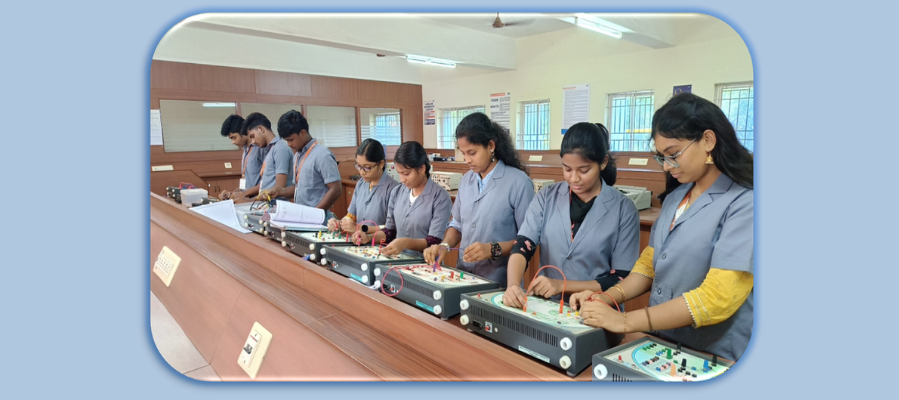
Lab 2: Control & Instrumentation Laboratory
Laboratory In-charge: Mr. U. Ramani, M.Tech., (Ph.D) Cost of the Lab: Rs. 7,91,684.1/- Area: 95.14 Sq.m
The Control and Instrumentation Laboratory provides hands-on experience in measurement techniques, industrial sensors, transducers and control systems. Students learn to analyze system responses, design controllers, tune PID parameters and evaluate the performance of dynamic systems using modern instrumentation. This laboratory strengthens analytical and problem-solving skills required in automation industries.
Outcomes of the Laboratory:
- Analyze different types of controllers and their applications.
- Design and implement various types of compensators for control systems.
- Explore and utilize simulation packages for control system analysis.
- Understand the fundamental principles and applications of bridge networks.
- Test and validate the performance of sensors and transducers.
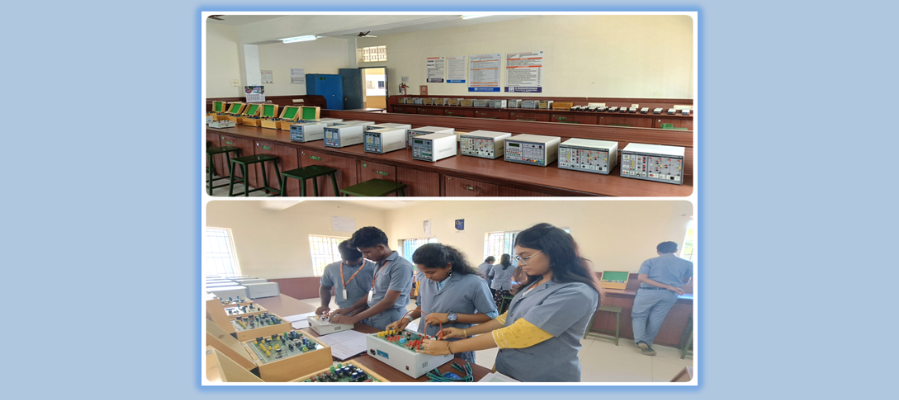
Lab 3: Power Electronics & Drives / Electronics Laboratory
Laboratory In-charge: Mr. S.P. Richard,
M.E., (Ph.D).
Cost of PED Lab: Rs. 12,54,448.37/-
Cost of Electronics Lab: Rs.
40,90,50.37/-
Area: 95.14 Sq.m
The Power Electronics and Drives Laboratory provides practical exposure to semiconductor devices, controlled rectifiers, DC-DC converters, inverters, motor drives and PWM techniques. Students develop the ability to analyze converter performance, implement motor speed control and understand power electronic applications used in renewable energy, electric vehicles and industrial automation.
Outcomes of the Laboratory:
- Experiment and analyze switching characteristics of various electronic devices.
- Understand and analyze AC–DC, DC–AC, DC–DC, and AC–AC converter circuits.
- Design, simulate, and test converter, inverter, and oscillator circuits using appropriate software tools.
- Study and evaluate transistor configurations and their characteristics.
- Gain knowledge on electrical drives, rectifiers, and filters.
- Understand and use instruments for frequency and phase measurement in electronic circuits.
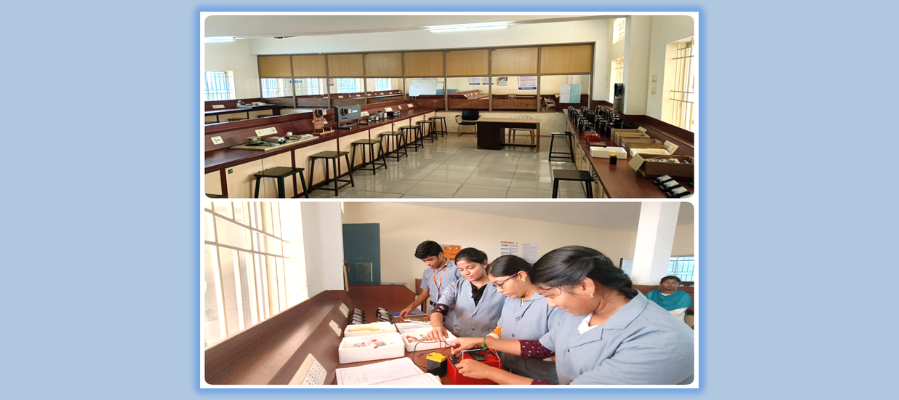
Lab 4: Engineering Practices Laboratory
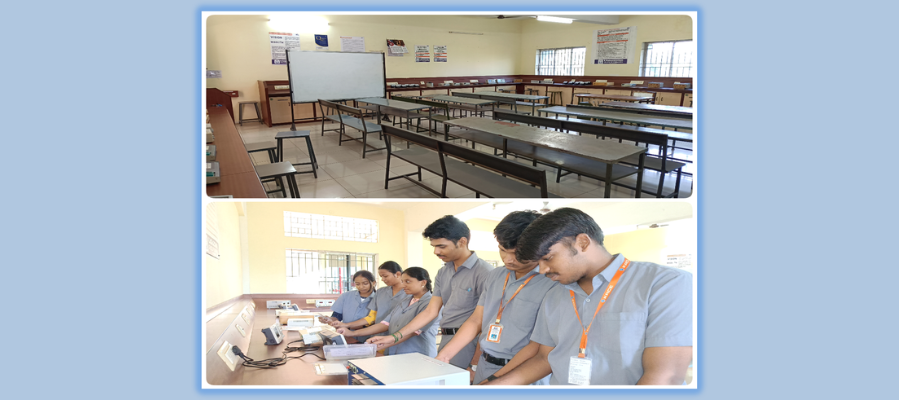
Laboratory In-charge: Mr. P. Vigneshwaran, M.E., (Ph.D.) Cost of the Lab: Rs. 2,32,668.067/- Area: 95.14 Sq.m
The Engineering Practices Laboratory introduces students to basic electrical wiring, soldering, PCB fabrication, safety practices, plumbing, fitting and mechanical assembly. Students acquire practical engineering skills, safe working procedures and the confidence to handle engineering tools and equipment used in multidisciplinary environments.
Outcomes of the Laboratory:
- Apply Ohm’s Law and Kirchhoff’s Laws to analyze simple electrical circuits.
- Demonstrate practical skills in residential electrical wiring, including staircase and fluorescent lamp circuits.
- Analyze and implement basic logic gates and combinational circuits such as half and full adders.
- Measure electrical quantities such as voltage, current, and power using standard instruments.
- Calculate and verify energy consumption using an energy meter.
Lab 5: Linear & Digital Integrated Circuits / Electric Circuits Laboratory
Laboratory In-charge: Mr. A. Prabhu,
M.E., (Ph.D.) /
Mr. A. Jainulafdeen, M.E., (Ph.D.)
Cost of LIC Lab: Rs. 8,35,590.97/-
Cost of EC Lab: Rs. 3,12,746.20/-
Area: 95.14 Sq.m
The Linear & Digital Integrated Circuits Laboratory develops practical knowledge in electrical circuit analysis, network theorems, operational amplifiers, analog ICs, logic gates, combinational and sequential circuits. Students learn to design, simulate, implement and troubleshoot analog and digital electronic circuits using modern laboratory instruments and simulation software.
Outcomes of the Laboratory:
- Apply circuit theorems, simulate electric circuits and analyze resonance in series and parallel circuits.
- Measure three-phase power and understand self and mutual inductance with coefficient of coupling.
- Understand and implement Boolean functions and code conversion techniques.
- Design and implement 4-bit shift registers and counters using specific counter ICs.
- Acquire knowledge on Operational Amplifier (Op-Amp) applications.
Lab 6: Power System Simulation Laboratory
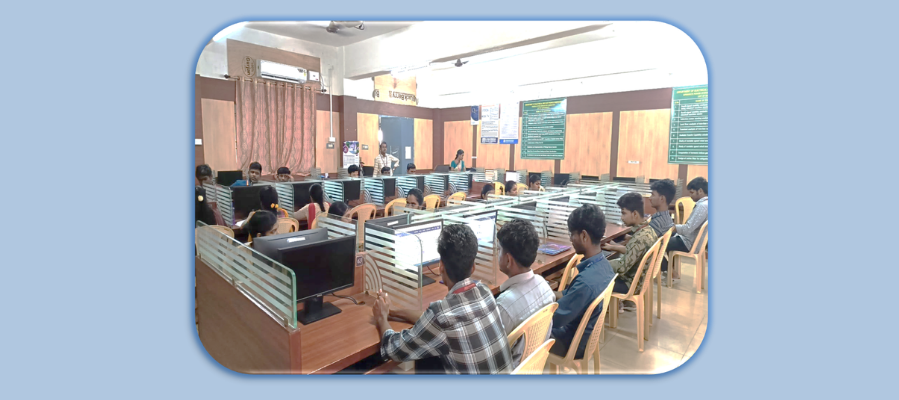
Laboratory In-charge: Dr. R. Arulraj, Ph.D. Cost of the Lab: Rs. 29,24,400.05/- Area: 95.14 Sq.m
The Power System Simulation Laboratory enables students to model, simulate and analyze power generation, transmission and distribution systems using industry-standard software such as MATLAB/Simulink, ETAP or equivalent tools. Students gain competency in load flow studies, fault analysis, transient studies, protection coordination and system stability analysis for modern power networks.
Outcomes of the Laboratory:
- Acquire knowledge on modeling of line parameters and load flow analysis methods.
- Formulate line impedance and admittance matrices using standard methods.
- Calculate fault current and line voltages in the power system during fault conditions.
- Model SMIB systems using stability criteria concepts.
- Solve the economic dispatch problem with and without transmission losses.
Lab 7: Renewable Energy Systems Laboratory
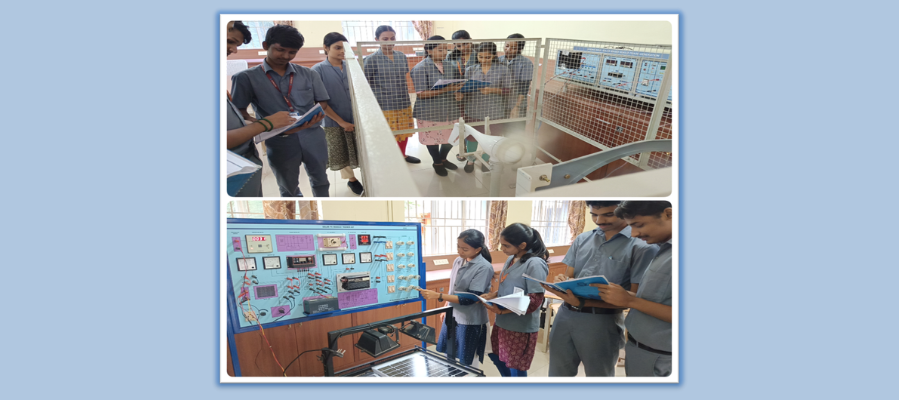
Laboratory In-charge: Dr. S. Titus, M.E., Ph.D. Cost of the Lab: Rs. 10,04,718.72/- Area: 95.14 Sq.m
The Renewable Energy Systems Laboratory provides practical understanding of solar photovoltaic systems, wind energy conversion, battery storage and hybrid energy systems. Students perform performance evaluation, energy analysis and system integration experiments, enabling them to design sustainable energy solutions for future power systems.
Outcomes of the Laboratory:
- Understand key issues involved in harnessing various forms of renewable energy.
- Acquire comprehensive knowledge of solar photovoltaic (PV) systems.
- Gain insights into the operation and components of wind energy conversion systems.
- Explore simulation techniques for analyzing hybrid energy systems.
- Recognize the current trends and future potential of renewable energy technologies.
Lab 8: Research Laboratory – I
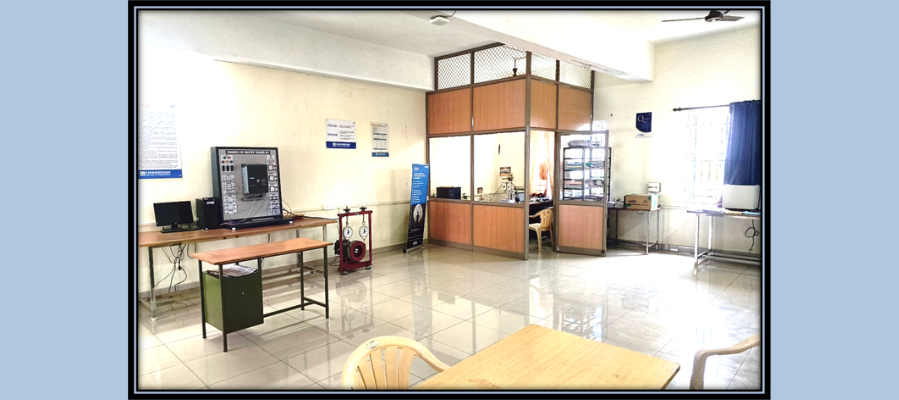
Laboratory In-charge: Dr. R. Ilango, M.Tech., Ph.D. Total Cost of the Lab: Rs. 10,12,950/- Area: 96.75 Sq.m
The Research Laboratory is established in the department for conducting scientific research, innovative experiments and project development. It provides undergraduate, postgraduate and research scholars with the facilities required to enhance research skills, develop innovative solutions and carry out interdisciplinary research activities.
Outcome of the Laboratory:
- Develop innovative engineering prototypes.
- Enhance research methodology and experimental skills.
- Promote interdisciplinary research activities.
- Support publication of quality research papers and patents.
- Strengthen analytical and problem-solving abilities.
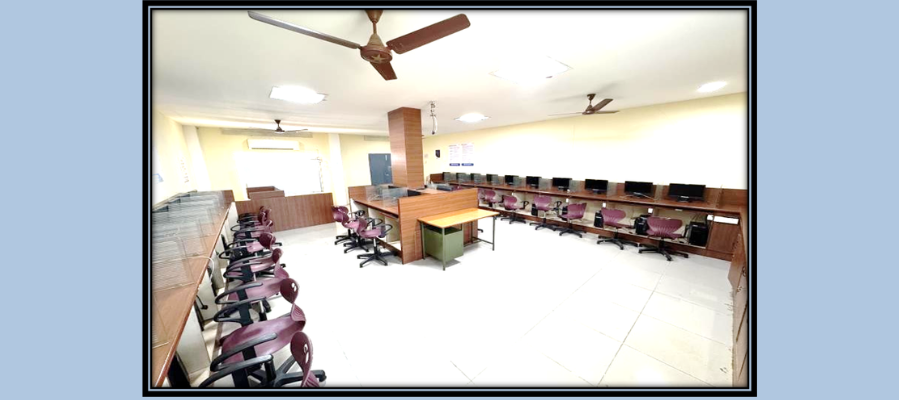
Lab 9: Research Laboratory – II
Total Cost of the Lab: Rs. 23,87,499.84/- Area: 64.154 Sq.m
Research Laboratories I & II facilitate undergraduate and postgraduate students in developing innovative prototypes, conducting interdisciplinary research and validating engineering concepts using advanced hardware and software platforms. The laboratory promotes innovation, patent-oriented projects and publication of quality research outcomes.
Outcomes of the Laboratory:
- Develop research-oriented thinking and innovation.
- Design and validate engineering concepts using modern tools.
- Encourage interdisciplinary research projects.
- Promote patent filing and research publications.
- Improve technical presentation and documentation skills.
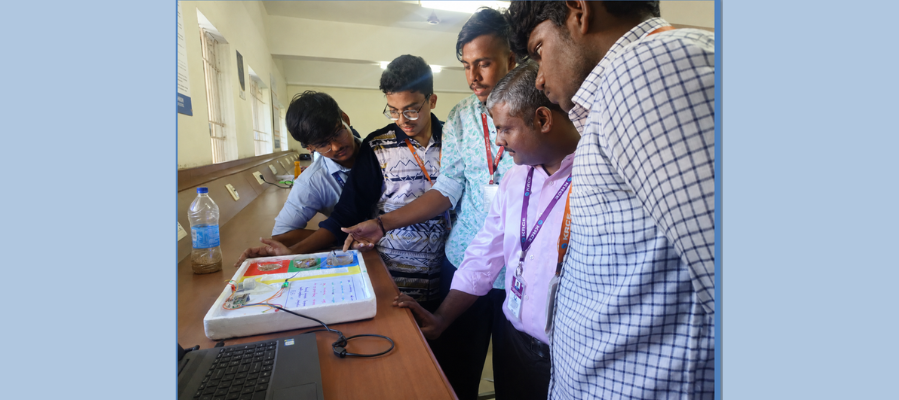
Lab 10: Centre of Excellence – Internet of Things (IoT) Laboratory
Total Cost of the Lab: Rs. 55,400/- Area: 96.75 Sq.m
The Centre of Excellence (CoE) in Internet of Things (IoT) serves as a hub for advanced research, innovation and skill development in IoT technologies. It provides state-of-the-art infrastructure including sensors, microcontrollers, communication modules and cloud platforms. Students undertake real-time industry-driven projects, certifications and smart automation solutions. The Internet of Things Laboratory enables students to design and implement IoT-based monitoring and control systems using microcontrollers, sensors, wireless communication and cloud platforms. Students gain experience in embedded programming, real-time data acquisition, remote monitoring and Industry 4.0 applications.
Outcomes of the Laboratory:
- Design and develop IoT-based monitoring and control systems.
- Interface sensors and actuators with embedded controllers.
- Implement wireless communication and cloud-based data monitoring.
- Develop smart automation applications using IoT technologies.
- Gain practical exposure to Industry 4.0 and smart infrastructure solutions.
Placement
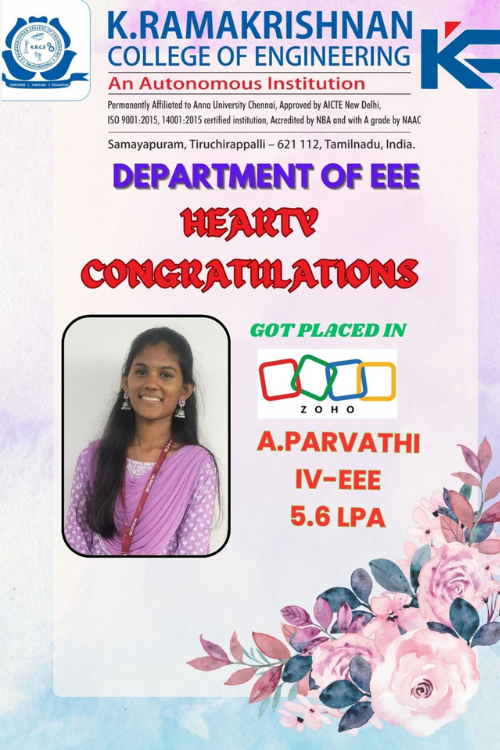
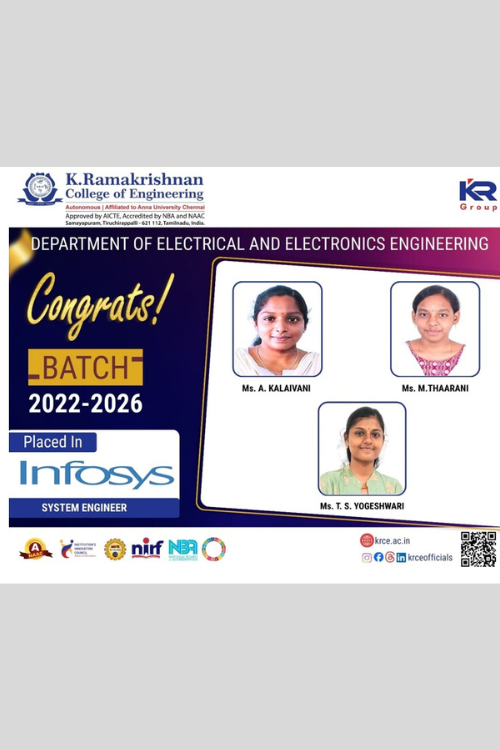
| S.No | Item | Number of Students Placed | View |
| 1 | 2020-2024 Batch Placement | 55 | View |
| 2 | 2019-2023 Batch Placement | 62 | View |
| 3 | 2018-2022 Batch Placement | 63 | View |
Department Events
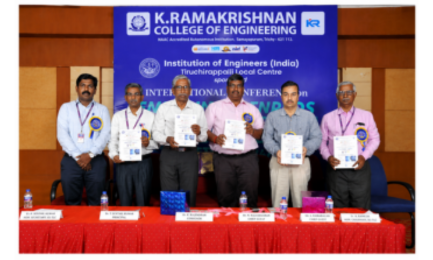
IEI-Sponsored International Conference on Emerging Trends in Engineering Science and Technology (ICETEST 2024) on 23rd and 24th May 2024.
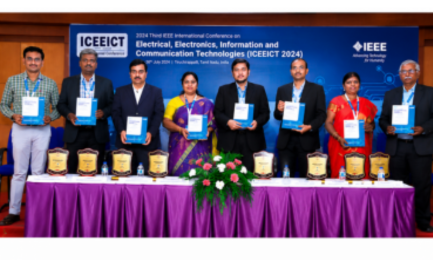
IEEE-Sponsored Third International Conference on Electrical, Electronics, Information and Communication Technologies (ICEEICT 2024) held at K. Ramakrishnan College of Engineering (Autonomous), Tiruchirappalli, from 24.07.2024 to 26.07.2024.
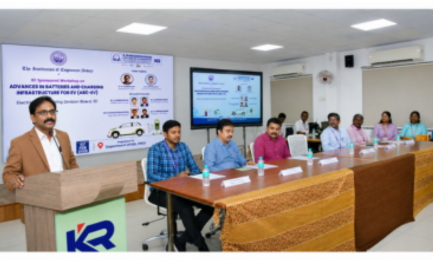
IEI Sponsored Workshop on Advances in Batteries and Charging Infrastructure for EV(ABC-EV) on 07.02.2025
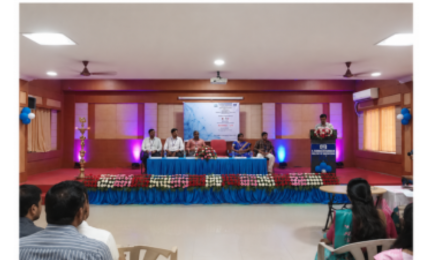
KRYPTO’23, a National Level Symposium, was successfully organized by the Department of Electrical and Electronics Engineering on 06.04.2023.
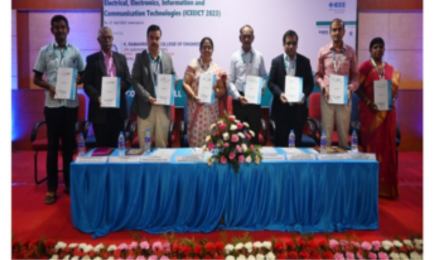
IEEE-Sponsored Second International Conference on Electrical, Electronics, Information and Communication Technologies (ICEEICT 2023) held at K. Ramakrishnan College of Engineering (Autonomous), Tiruchirappalli, from 05.04.2023 to 07.04.2023.
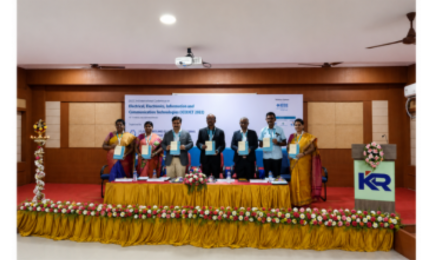
First IEEE-Sponsored Conference organized by the Department of Electrical and Electronics Engineering on 16.02.2022.
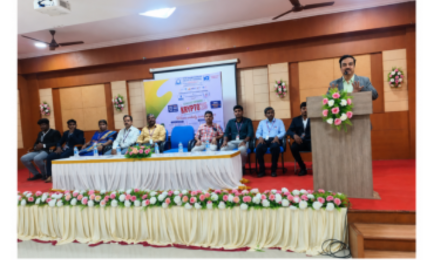
KRYPTO’25, a National Level Symposium, was successfully organized by the Department of Electrical and Electronics Engineering on 28.03.2025.
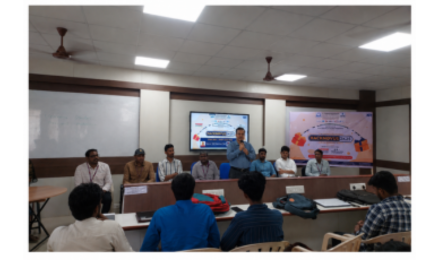
The Department of Electrical and Electronics Engineering organized the National Level Hackathon ‘HACKNOVUS 2K25’ on 17.04.2025.
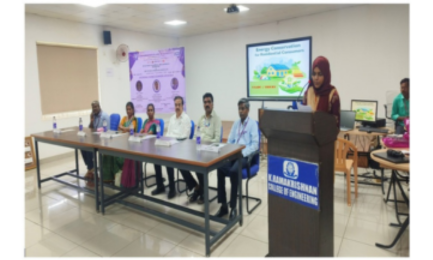
National Energy Conservation Day was celebrated on 16.04.2026 in the presence of Er. A. Mala, Er. R. Antony Selvaraja, and Er. R. Akila from Technical Training & Development Centre, TNEB, Trichy.
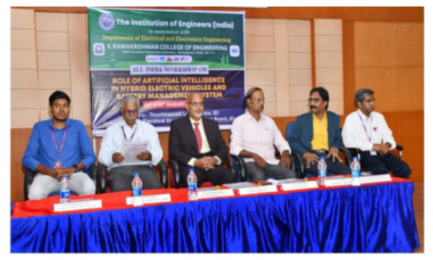
All India Workshop on ‘Role of AI in Hybrid Electric Vehicles and Battery Management Systems’ conducted on 09.08.2024 with Dr. S. Ravimaran, FIE, IEI–Tiruchirappalli Local Centre, as the Chief Guest.
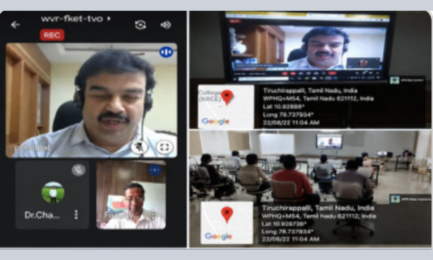
Five days Faculty Development Programme on Nano Sensors and Devices By NITTTR, Chandigarh on 22nd August 26th August 2022.
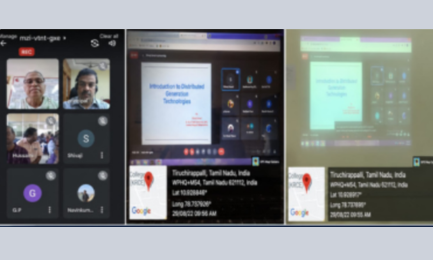
Five days Faculty Development Programme on Smart Grid And Renewable Energy Sources By NITTTR, Chandigarh on 29 August 02nd September 2022.
Faculty Achievements
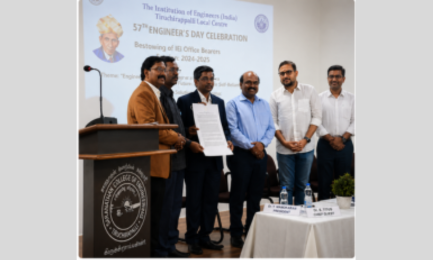
We are proud to announce that our esteemed Chief Guest, Dr. S. Titus, has been appointed as the Joint Secretary of The Institution of Engineers (India), Tiruchirappalli Local Centre, for the session 2024–2025.
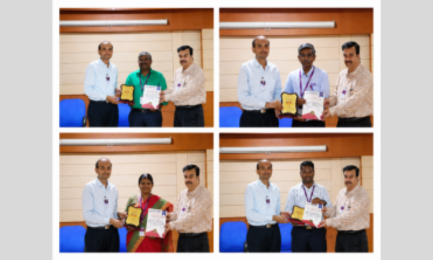
Mr. G. Gabriel Santhosh Kumar, Dr. S. Titus, Dr. K. Dhayalini, and Mr. P. Parthasarathy received the title of “Best Performer in Institutional Service and Leadership” in appreciation of their significant contributions to institutional growth and leadership
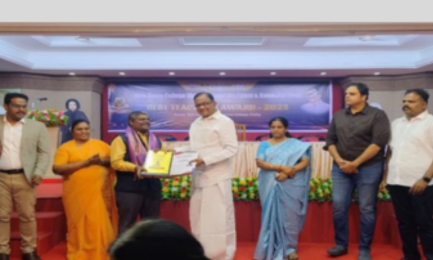
Dr. G. Gabriel Santhosh Kumar Received best Teacher’s Award 2025 at Holy cross College (Autonomous), Trichy.
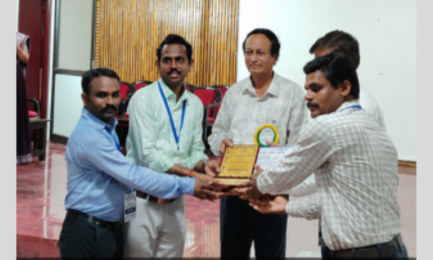
KRCE Institutions Innovation Council received the "Best Creative Poster Award" in IIC Regional Meet 2025.
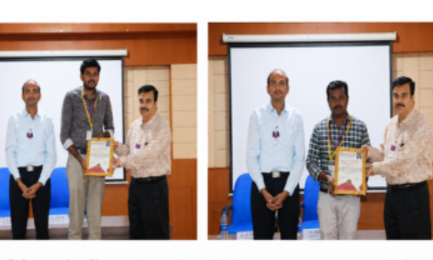
Mr. A. Subramaniya Siva and Mr. A. Prabhu were conferred with the title of “Best Teacher” for their outstanding dedication to teaching and academic excellence
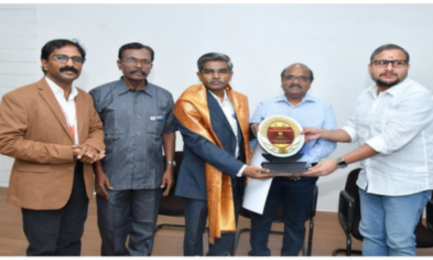
Dr. S. Titus Received PVK Achan Memorial IEI Trichy Local Centre Legend Award
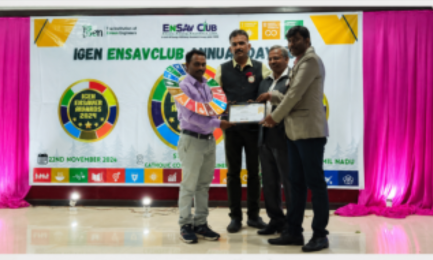
Mr. T. Vadivelan received the prestigious IGEN Award in recognition of his outstanding contributions to green engineering and sustainable development.
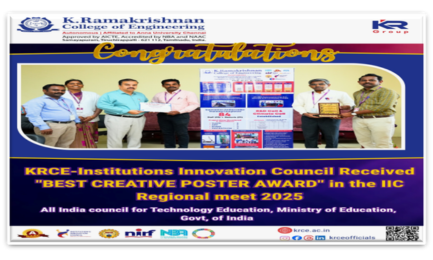
KRCE Institutions Innovation Council Received “Best creative Poster award” in IIC Regional meet 2025
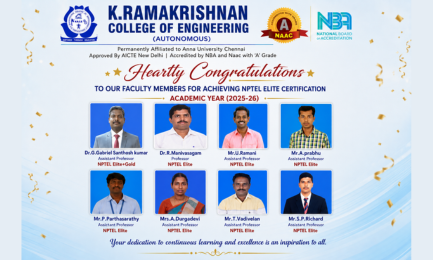
Students Achievements
Academic Achievements
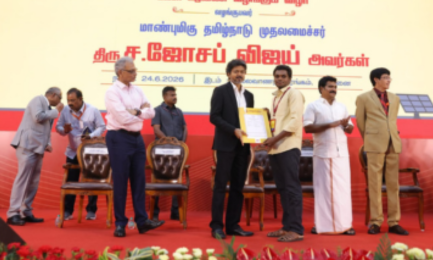
Proud to Celebrate Our EEE Student Balamurugan P (2020–2024 Batch) receives the Assistant Engineer (TNEB) appointment order from the Hon'ble Chief Minister. Congratulations and best wishes!
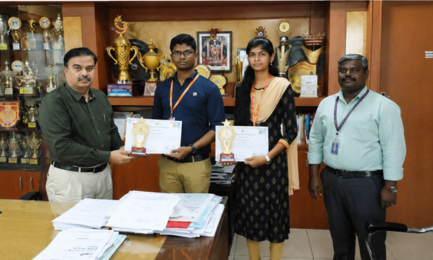
III Year EEE students Gopika P. and Suswin Ganesh R. secured First prizes in the “Debugging” event conducted as part of VYUGAS 2023, a National Level Technical Symposium organized by the Department of Computer Science and Computer Applications at SRM Trichy Arts and Science College on 03 March 2023.
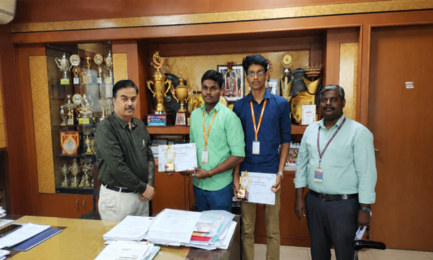
III Year EEE students Balamurugan S. and Karthick S. secured First prizes in the “Quiz” event conducted as part of VYUGAS 2023, a National Level Technical Symposium organized by the Department of Computer Science and Computer Applications at SRM Trichy Arts and Science College on 03 March 2023.
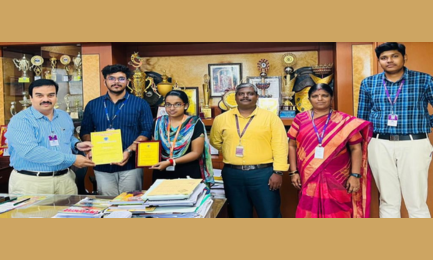
S. Irfan Basha and M. Saraswathy, Final Year EEE students, received the prestigious ISTE Best Student Award at Sri Venkateswara College of Engineering on 29 April 2023.
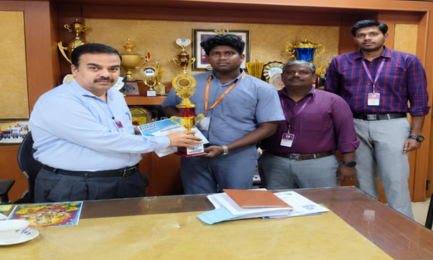
Shyam Kumar S, a student of III Year EEE, K. Ramakrishnan College of Engineering, has secured the First Prize in the National Level Hackathon conducted by Isysway Technologies, Thanjavur.
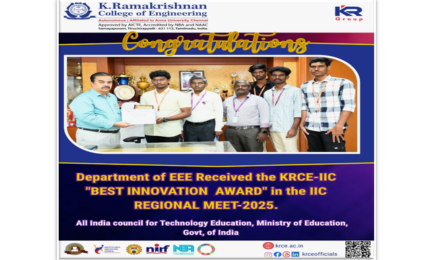
Department of EEE Students Received the KRCE-IIC “Best Innovation Award” in the IIC Regional Meet 2005 organized by AICTE, Ministry of Education, Govt of India.
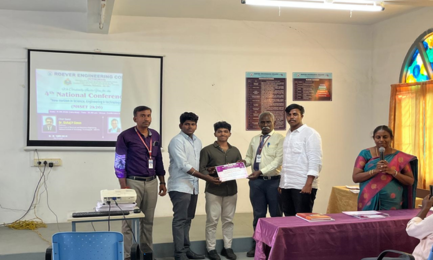
S.Shyam Kumar, S. Sibi Annamalai and S.Madan secured the prestigious “Best Paper Award” in the 4th National Conference on New Horizon in Science, Engineering & Technology (NHSET 2K26) organized by Roever Engineering College (Autonomous), Perambalur.
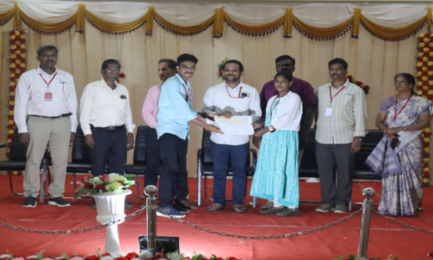
Alin Judith A –III EEE, Yuvaraj S –III EEE Secured Second prize and Won Cash Award of Rs 1000 at the National Level Technical Symposium – AURA’26, held on 10th April 2026 at Government College of Engineering, Thanjavur.
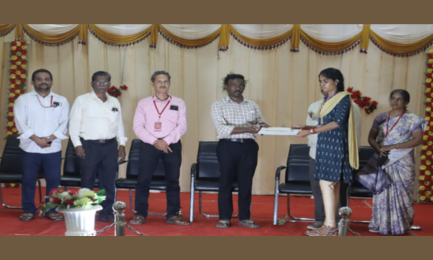
Saai Shrri B K –III EEE, Jeeva D –III EEE Secured Third prize and Won Cash Award of Rs 800 at the National Level Technical Symposium – AURA’26, held on 10th April 2026 at Government College of Engineering, Thanjavur.
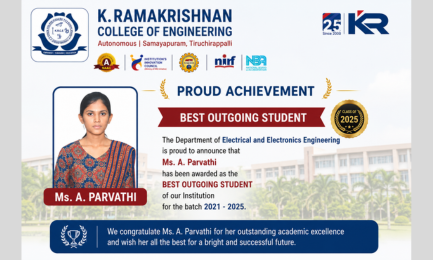
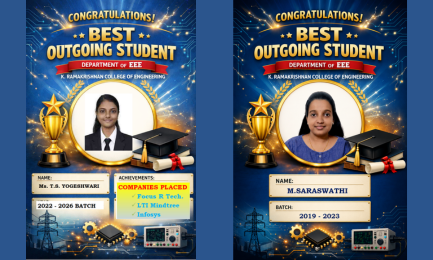
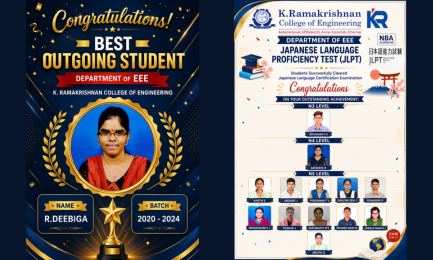
Best Outgoing Student
Fine Arts Achievements
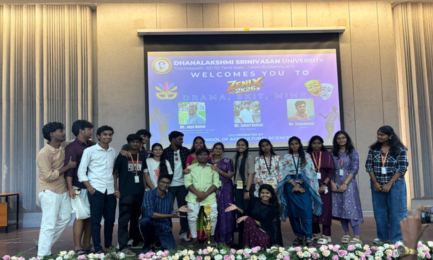
Thaslim Banu From III EEE Secured III place in Drama and I place in Skit Event at Zenix’26 hosted by Dhanalakshmi Srinivasan University.
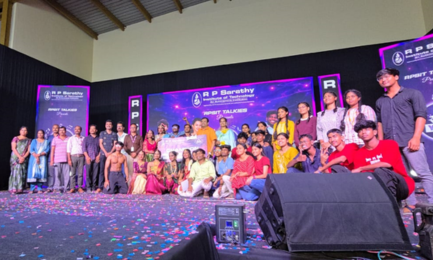
SANJANA P From III EEE has participated & representing for our college to won overall winner in Intercollege cultural fest YUVA-2026 Conducted by R P Saraswathy Institute of Technology, Salem.
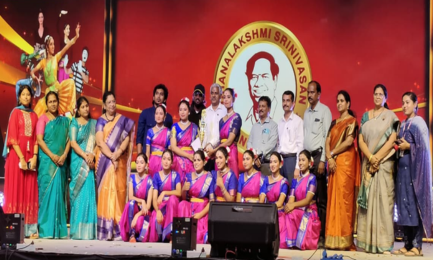
Sruthi D, Dhanushri II EEE and her Team Bagged Third prize in Folk dance Event at DSU,Trichi.
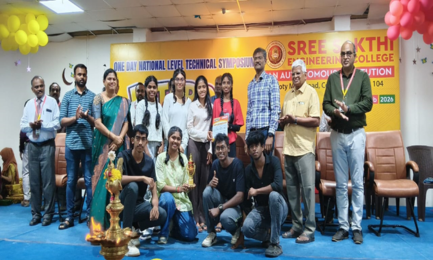
SANJANA P From III EEE has secured II place in the GROUP DANCE event at the One Day National Level Technical Symposium "INTEROFEST-2K26" conducted by Sree Sakthi Engineering College (Autonomous), Coimbatore held on 28th February 2026.
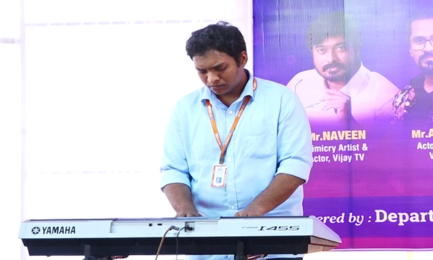
JEFFRY C from II EEE secured II prize in Instrumental Event in Intra college Event Talentia’25 at KRCE.
Sports Achievements
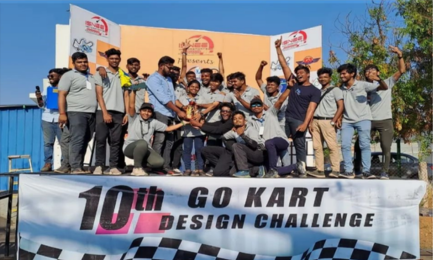
Clive Nelson , Karthiban, Karuppaiah and Lokesh from EEE department Representing in The SAE TN45 Motorsports team of K. Ramakrishnan College of Engineering achieved a remarkable milestone by securing the “Best Design and Aesthetics Award” in the prestigious 10th Go-Kart Design Challenge (GKDC) 2023 held at Kari Motor Speedway from 10 April 2023 to 13 April 2023.
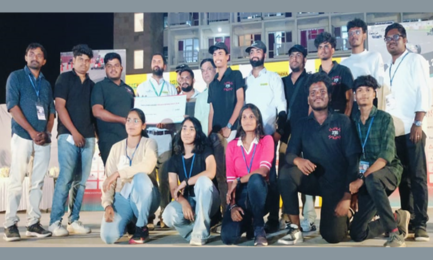
Saaishrri, Rishi and Raghul prasathII year EEE students actively participated in TN45 MOTOR SPORTS Event representing our College Vehicle Number –IKR-24-51 in 9th season of Indian Karting Race- IKR at Galgotias University and Buddh International Circuits, Greater Noida, Uttar Pradesh, India.
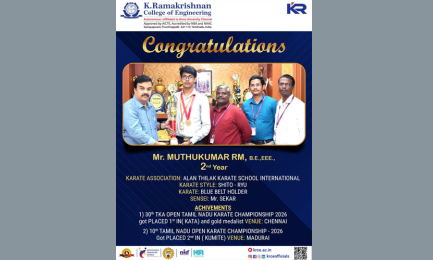
Mr.Muthukumar RM from II EEE achieved 1st place in 30Th TKA Open TN Karate Championship 2006 and won gold medal in Chennai and also secured II prize in 10th TN Open karate Championship 2006,Madurai.
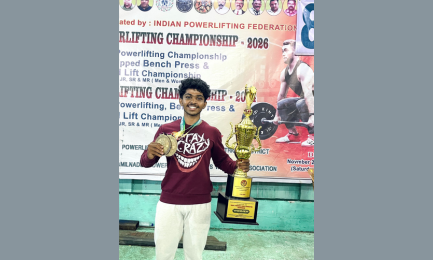
Mr. S. Madan From EEE III year has secured First place in 59kg weight class at the Junior Powerlifting Championship at Powerlifting Sports Association Trichy District.
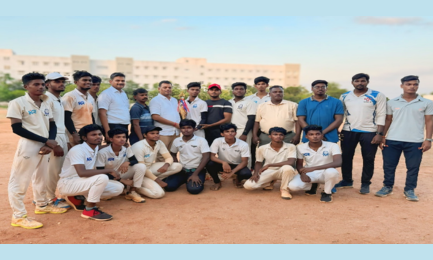
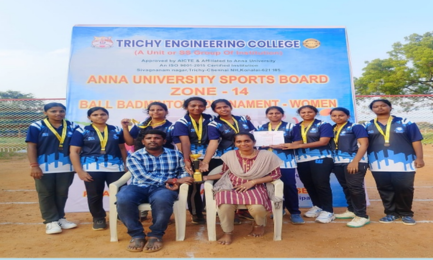
Students from our EEE Department actively participated in various sports events conducted by the Anna university sports board and won the medals and also won the Cash Award after ranked second place in CM Trophy District Event.
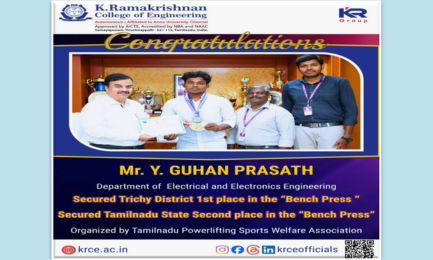
K. Ramakrishnan College of Engineering proudly congratulates Mr. Y. Guhan Prasath, EEE-III year Student for his remarkable achievement in the field of Powerlifting organized by Tamilnadu Powerlifting Sports Welfare Association.
Testimonials
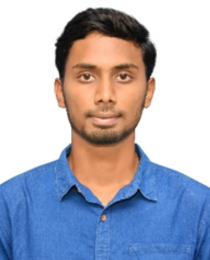
| NAME : | Jegadeesh MM |
| BATCH : | 2019 - 2023 |
| CURRENT POSITION : | Software Engineer |
| COMPANY : | Renault Group India |
I am a proud alumnus of the Department of Electrical and Electronics Engineering, K. Ramakrishnan College of Engineering. What makes KRCE unique is its student-centric environment, where mentors genuinely care about students and emphasize quality over quantity in learning. The guidance, encouragement, placement-oriented training, and industry-focused education provided a strong foundation for my career. Beyond academics, I was an active sportsperson throughout my college years and had the privilege of leading the college volleyball team. This experience strengthened my teamwork, discipline, and leadership abilities. Today, I am working as a Software Engineer in a leading France-based automobile manufacturer. I am grateful to KRCE for equipping me with the knowledge, skills, and confidence needed to succeed in the industry. I will always cherish my association with the institution and remain thankful for the strong foundation it has provided for my professional and personal growth.
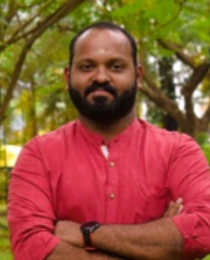
| NAME : | Yuva Priyan J |
| BATCH : | 2009 - 2012 |
| CURRENT POSITION : | Deputy Manager - BDM India Export |
| COMPANY : | Amphenol SOCAPEX India |
I completed my graduation in Electrical and Electronics Engineering. I came to KRCE looking for an education, but I left with a complete personality transformation. Though the first batch had limited resources and access to technologies, we had the freedom to explore our interests by participating in various expos, sports, and cultural events. These opportunities helped us evaluate ourselves and reshape our future. With the guidance and appreciation of our respected Principal, Dr. D. Srinivasan, and the continuous support of my department faculty, I experienced a perfect ecosystem where the close-knit campus felt like a family that encouraged everyone's growth. I graduated not only with a degree but also with the practical confidence required to lead effectively. I am incredibly proud to be a part of this alumni network. Today, I am working as a Deputy Manager – BDM in the Defence and Aerospace market, handling MoD, DRDO, and PSU projects. I will always remain grateful to KRCE for laying the foundation of my successful professional journey.
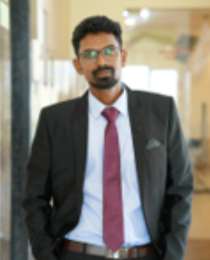
| NAME : | Gideon Raja |
| BATCH : | 2013 - 2017 |
| CURRENT POSITION : | Consultant and Project Manager |
| COMPANY : | Zendesk |
I am Gideon Raja, a proud alumnus of the 2013–2017 batch of the Department of Electrical and Electronics Engineering. My journey at K. Ramakrishnan College of Engineering laid a strong academic and professional foundation that continues to guide me in my career. The guidance of the faculty, practical learning opportunities, and emphasis on discipline and problem-solving helped me develop the confidence to excel in the technology industry. Beyond academics, the college nurtured leadership, communication, and teamwork skills that have been invaluable throughout my professional journey. Today, I serve as a Consultant and Project Manager at Zendesk, where I work with global clients to deliver customer experience solutions and lead successful project implementations. I remain grateful to the management, faculty, and mentors for their unwavering support and encouragement. I sincerely thank my college for shaping my career and inspiring me to pursue excellence. I wish the institution continued success in empowering future generations of engineers.

| NAME : | Parvathi A |
| BATCH : | 2021 - 2025 |
| CURRENT POSITION : | Member Technical Staff |
| COMPANY : | Zoho Corporation Private Limited |
I am A. Parvathi, a proud graduate of K. Ramakrishnan College of Engineering from the 2021–2025 batch. My journey at the college was not only about academics but also about personal growth, learning, and discovering my potential. The institution provided a supportive environment where I was encouraged to think critically, take initiative, and continuously improve myself. The curriculum, practical learning opportunities, and mentorship from faculty members helped me build a strong technical foundation and prepared me to face industry challenges with confidence. I am thankful to our respected Principal, Dr. D. Srinivasan Sir, and Chairman, Mr. K. Ramakrishnan Sir, whose dedication to quality education and student development has created countless opportunities for aspiring engineers. Today, I am working as a Member Technical Staff at Zoho. The values of perseverance, professionalism, and continuous learning that I gained during my college years continue to guide me in my career. I will always cherish the experiences, friendships, and lessons I gained at K. Ramakrishnan College of Engineering and remain grateful for the strong foundation it has provided for my future success.
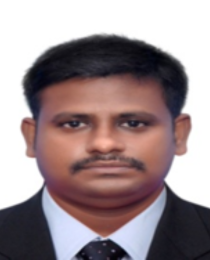
| NAME : | K A VISWANATHAN |
| BATCH : | 2009 - 2012 |
| CURRENT POSITION : | Deputy Manager |
| COMPANY : | Yazaki India Private Limited |
I am Viswanathan K. A., and I completed my degree in Electrical and Electronics Engineering at K. Ramakrishnan College of Engineering from 2009 to 2012. The institution provides a strong technical foundation to its students, and my experience there helped me develop discipline and enhance my problem-solving abilities. The practical exposure and continuous guidance from my professors played a significant role in shaping my career path. I would like to express my sincere gratitude to our respected Principal, Dr. D. Srinivasan Sir, and Chairman, Mr. K. Ramakrishnan Sir, for their leadership and for fostering an environment that supports academic and professional excellence. Currently, I am working as a Deputy Manager at Yazaki India Private Limited, a Japanese-based automotive company. I am truly grateful to my college for equipping me with the knowledge and confidence required to grow professionally and take on leadership responsibilities in the industry.
| NAME : | S SUBHIKSHA |
| BATCH : | 2018 - 2022 |
| CURRENT POSITION : | Senior SDET |
| COMPANY : | Zuci Systems |
I am Subhiksha S., and I completed my Engineering degree at K. Ramakrishnan College of Engineering. The college played a vital role in building my technical knowledge, analytical thinking, and professional confidence. The quality education, practical exposure, and continuous support from the faculty helped shape my career and prepared me for the challenges of the industry. I would like to express my sincere gratitude to our respected Principal, Dr. D. Srinivasan, and Chairman, Mr. K. Ramakrishnan, for their visionary leadership and commitment to academic excellence. Currently, I am working as a Senior Software Development Engineer in Test (SDET) in the IT field. I am truly grateful to my college for equipping me with the knowledge, skills, and confidence required to grow professionally and contribute effectively to the industry.

| NAME : | RAJESHKUMAR R |
| BATCH : | 2018 - 2022 |
| CURRENT POSITION : | Electrical BIM Engineer |
| COMPANY : | Pan Gulf Technologies Limited |
I am Rajeshkumar R., and I completed my degree in Electrical and Electronics Engineering at K. Ramakrishnan College of Engineering from 2018 to 2022. The institution provides a strong technical foundation to its students, and my experience there helped me develop discipline and enhance my problem-solving abilities. The practical exposure and continuous guidance from my professors played a significant role in shaping my career path. I would like to express my sincere gratitude to our respected Principal, Dr. D. Srinivasan Sir, and Chairman, Mr. K. Ramakrishnan Sir, for their leadership and for fostering an environment that supports academic and professional excellence. Currently, I am working as an Electrical BIM Engineer at Pan Gulf Technologies, a BIM company. I am truly grateful to my college for equipping me with the knowledge and confidence required to grow professionally and take on leadership responsibilities in the industry.
